

In every structured government system, major decisions require careful planning, analysis, and formal approval. One of the most important documents used in this process is the memorandum to cabinet. This official paper serves as a key communication tool between ministers and cabinet members, presenting proposals that require collective discussion and endorsement. Whether related to policy reforms, budget allocations, or new legislative initiatives, a memorandum to cabinet ensures that decisions are informed, transparent, and aligned with national priorities. Understanding how this document functions provides insight into how governments operate behind the scenes. It reflects the discipline, coordination, and accountability required to guide public policy effectively in a complex political environment.
What Is a Memorandum to Cabinet?
A memorandum to cabinet is a formal document submitted by a government minister to seek approval or direction from the cabinet. It outlines a specific proposal, identifies the issue at hand, and presents recommended actions for consideration. The purpose of the memorandum to cabinet is to ensure that significant decisions are discussed collectively rather than made unilaterally. This document typically includes background information, analysis of policy options, financial implications, legal considerations, and potential risks. By presenting comprehensive details, it enables cabinet members to evaluate the proposal thoroughly before reaching a decision. In parliamentary systems especially, this process strengthens coordinated governance. The memorandum to cabinet acts as both an informative brief and a persuasive argument, structured to support sound and responsible decision-making at the highest executive level.
The Structure and Key Components
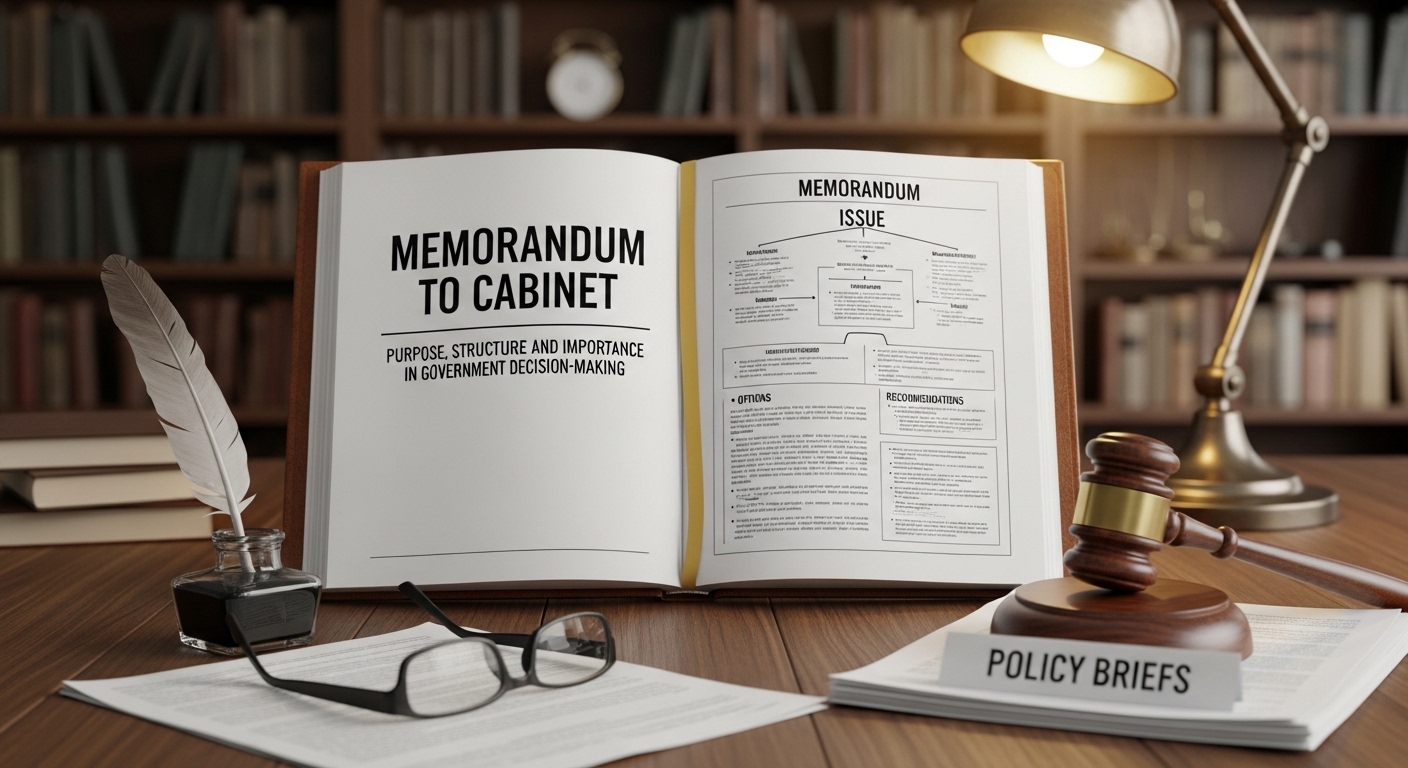
A well-prepared memorandum to cabinet follows a clear and logical structure to support effective review. It usually begins with a concise summary that highlights the purpose of the proposal and the decision being sought. This is followed by background information explaining why the issue requires attention. The core section presents policy analysis, outlining available options and their advantages or disadvantages. Financial impacts, resource requirements, and legal implications are carefully detailed to ensure transparency. Risk assessment is another essential component, identifying potential challenges and mitigation strategies. The document concludes with a recommended course of action and implementation timeline. Clarity and precision are critical because cabinet members must review numerous proposals efficiently. A structured memorandum to cabinet ensures that complex information is presented in a digestible and professional format.
The Role in Policy Development
The memorandum to cabinet plays a central role in shaping public policy. Before a new law, regulation, or strategic initiative is introduced, it often begins as a proposal outlined in this document. Through this process, ministers engage in collaborative dialogue, ensuring that policies reflect collective priorities rather than individual viewpoints. The memorandum to cabinet encourages evidence-based decision-making by requiring detailed research and analysis. It also ensures that proposals align with government objectives and fiscal frameworks. By promoting structured discussion, the document reduces the likelihood of rushed or poorly considered decisions. In this way, it strengthens governance and accountability. Policy development is rarely spontaneous; it is a deliberate process supported by documentation that facilitates thoughtful evaluation and informed consensus among cabinet members.
Confidentiality and Accountability
Confidentiality is a defining characteristic of the memorandum to cabinet process. Discussions and documents are typically protected to allow ministers to debate freely and candidly. This confidentiality supports honest dialogue, enabling participants to express concerns, question assumptions, and propose revisions without external pressure. At the same time, accountability remains a core principle. Although the details of cabinet deliberations may remain private, final decisions and implemented policies are subject to public scrutiny and legislative oversight. The memorandum to cabinet thus balances discretion with responsibility. It ensures that sensitive matters, such as national security or major economic reforms, are handled carefully while still adhering to democratic standards. This dual focus on confidentiality and accountability is essential for maintaining public trust in government institutions.
Challenges in Preparing a Memorandum to Cabinet
Drafting a memorandum to cabinet requires significant expertise and coordination. Government departments must gather accurate data, consult stakeholders, and evaluate policy implications before submission. Time constraints, political considerations, and resource limitations can complicate the preparation process. The document must be clear, persuasive, and aligned with broader governmental strategies. Inaccurate analysis or incomplete information can delay approval or weaken confidence in the proposal. Additionally, competing priorities within government may require negotiation and compromise before a memorandum to cabinet reaches final form. Despite these challenges, the rigorous preparation process enhances the overall quality of decision-making. It ensures that proposals presented to cabinet are well-developed and thoroughly examined before any commitment of public resources.
Conclusion
The memorandum to cabinet is a vital instrument in governmental operations, guiding policy development and executive decision-making. Through its structured format, detailed analysis, and collaborative review process, it supports transparency, accountability, and strategic planning. By understanding its purpose and function, we gain insight into how governments transform ideas into actionable policies. The memorandum to cabinet remains an essential pillar of responsible governance, ensuring that major decisions are thoughtful, coordinated, and aligned with national interests.