

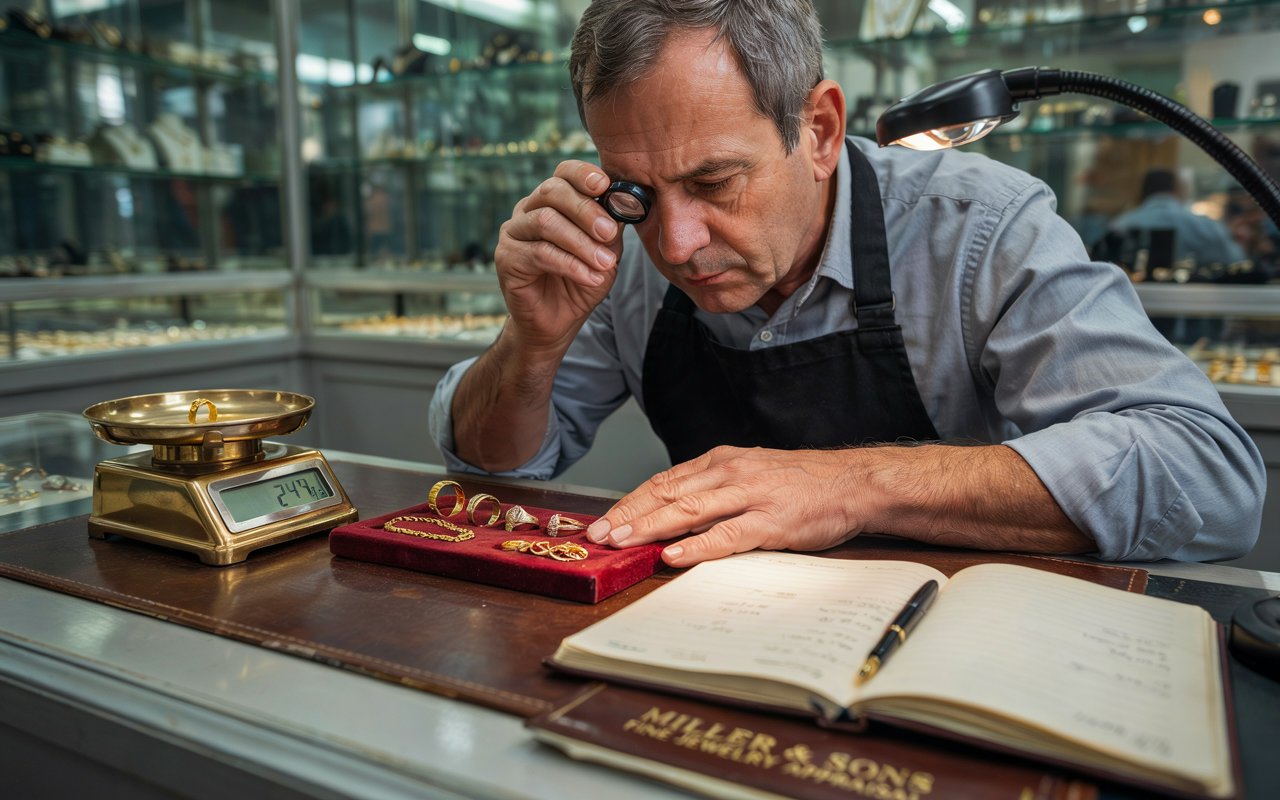
Many people own gold rings or chains they no longer wear. Before selling them, one question usually comes up: what are they actually worth?
The answer depends on several factors. Buyers look beyond appearance and assess purity, weight, market conditions, and other details that directly affect value.
What Factors Influence the Value of Gold Jewelry?
Gold buyers follow a structured process when evaluating jewelry. Understanding gold and its different shades can help sellers recognize how purity, alloy composition, and color variations may influence the appraisal process.
- Gold Purity: Higher karat gold contains a greater percentage of pure gold.
- Weight: The amount of gold in a piece directly impacts its value.
- Current Market Price: Daily gold prices influence what buyers can offer.
- Condition: Physical condition may affect resale opportunities.
- Brand Recognition: Designer jewelry can carry value beyond gold content.
- Gemstones: Diamonds and precious stones may increase worth.
- Demand: Popular styles can attract stronger offers from buyers.
Understanding the Main Factors Buyers Examine
Every appraisal starts with a few core measurements. These factors form the foundation of nearly every offer.
- Gold Purity Matters First
Purity tells buyers how much actual gold is present in a piece of jewelry. Most rings and chains are made from gold alloys rather than pure gold.
A 24K item contains nearly pure gold, while lower karat jewelry contains other metals. The higher the gold percentage, the greater the potential value.
- Weight Plays a Major Role
Once purity is verified, buyers weigh the item using calibrated scales. Even small differences in weight can affect the final offer.
A heavier chain or ring contains more gold material. This makes accurate weighing one of the most important steps in the process.
- Market Prices Influence Every Evaluation
Gold is traded globally, and prices change throughout the day. Economic conditions, inflation, and investor activity all influence pricing.
Buyers monitor the current spot price because it serves as the benchmark for determining value.
- Hallmarks Help Verify Authenticity
Most gold jewelry includes markings that indicate purity. These stamps often appear inside rings or near clasps on chains.
Buyers use these markings as an initial reference point. They provide important clues about metal composition before further testing begins.
- Professional Testing Confirms Purity
Experienced buyers do not rely solely on hallmarks. They often perform additional testing to confirm the jewelry’s gold content.
Methods such as electronic testing or XRF analysis help verify actual purity and reduce the chance of inaccurate evaluations.
- Jewelry Type Can Affect Demand
Certain jewelry styles tend to attract more interest than others. Popular chains and classic ring designs are often easier to resell.
While gold content remains the priority, overall buyer demand can influence how attractive a piece is in the secondary market.
Additional Factors That Can Affect Gold Ring and Chain Values
Gold content drives most valuations, but it is not the only consideration. Buyers often review several secondary factors before making a final offer.
Condition of the Jewelry
Scratches, dents, or broken clasps do not automatically make a piece worthless. Many buyers purchase jewelry primarily for its gold content.
However, pieces in excellent condition may retain additional resale potential if they can be sold without being melted down.
Designer Brands Can Increase Value
Luxury brands often command higher prices than unbranded jewelry. Buyers recognize that certain names carry demand beyond gold weight alone.
Pieces from respected brands may receive a premium because of their brand recognition in the marketplace.
Gemstones May Add Additional Worth
Many gold rings contain diamonds, sapphires, emeralds, or other gemstones. These stones may contribute additional value depending on quality.
A professional evaluation helps determine whether the gemstone quality has a meaningful impact on the overall offer.
Vintage and Antique Appeal
Older jewelry sometimes attracts collectors. Unique craftsmanship and historical significance can make certain pieces more desirable.
When a ring or chain has notable history, its collectible value may exceed the worth of the gold alone.
Chain Style Can Influence Resale
Rope chains, Cuban links, Figaro chains, and box chains often attract different levels of buyer interest. Trends can influence demand.
Popular styles may create stronger opportunities for resale because of their market appeal among future buyers.
Experience Makes a Difference
Not every buyer evaluates jewelry the same way. Knowledge and experience often determine how much value is identified.
If you are unsure whether a single item is worth selling, learning more about selling one piece of gold jewelry can help you understand how buyers evaluate individual pieces.
Documentation Can Help
Receipts, certificates, and original packaging may support a more detailed appraisal. These items provide useful information about the jewelry.
Supporting records help establish purchase history and may strengthen confidence during the evaluation process.
How Buyers Calculate Gold Value
Professional buyers follow a fairly consistent process when determining value. Each step provides information that contributes to the final offer.
|
Evaluation Step |
What Buyers Check |
Why It Matters |
|
Purity Testing |
Karat level |
Determines gold percentage |
|
Weighing |
Total weight |
Measures gold quantity |
|
Market Review |
Current gold price |
Reflects market conditions |
|
Condition Check |
Wear and damage |
Assesses resale potential |
|
Brand Review |
Designer recognition |
Identifies premium value |
|
Gemstone Review |
Stones and diamonds |
Adds possible value |
|
Final Assessment |
Combined findings |
Produces final offer |
Common Misconceptions About Gold Jewelry Value
Many sellers enter the process with assumptions that do not always reflect how professional evaluations work. Understanding the facts can help set realistic expectations.
- Bigger Jewelry Is Always Worth More
A larger piece may appear more valuable at first glance. Appearance alone does not determine actual worth.
A bulky ring made from lower karat gold may contain less gold content than a smaller piece with higher purity.
- Broken Jewelry Has No Value
This is one of the most common misconceptions. Buyers often purchase damaged jewelry based on gold weight and purity.
Even broken chains can retain significant metal value if they contain a meaningful amount of gold.
- Retail Price Equals Resale Value
Many people expect to receive close to the original purchase price. In reality, retail pricing includes labor, marketing, and markup.
Gold buyers focus on the jewelry’s current market value rather than what was originally paid.
- All Buyers Offer the Same Price
Different buyers may specialize in different markets. Some focus on gold content while others consider designer resale opportunities.
Comparing offers helps sellers identify the most competitive evaluation for their jewelry.
- Older Jewelry Is Automatically More Valuable
Age alone does not guarantee a higher price. Some vintage items are highly desirable, while others are valued primarily for gold content.
Buyers assess whether a piece has meaningful historical significance before assigning additional value.
- White Gold Is Worth Less Than Yellow Gold
Many people assume color determines value. In reality, purity and weight matter much more.
A white gold ring and yellow gold ring with the same karat rating often contain similar underlying value.
Practical Tips Before Selling Gold Rings and Chains
Preparation can help sellers feel more confident during the appraisal process. A few simple steps can also make conversations with buyers easier.
- Check Karat Markings: Look for stamps such as 10K, 14K, or 18K.
- Separate Different Pieces: Organize jewelry by purity level.
- Know the Current Gold Price: Understand market conditions before selling.
- Gather Documentation: Bring receipts or certificates when available.
- Ask About Testing Methods: Reputable buyers explain their process.
- Request a Breakdown: Understand how the offer was calculated.
- Compare Multiple Offers: Taking time to compare can be beneficial.
Conclusion
The value of a gold ring or chain is determined by more than appearance alone. Buyers look at purity, weight, market prices, condition, brand recognition, gemstones, and demand before making an offer. Understanding these factors helps sellers approach the process with realistic expectations. Whether you are selling a single ring or several chains, knowing how buyers calculate value can help you make informed decisions and secure a fair offer for your jewelry.