

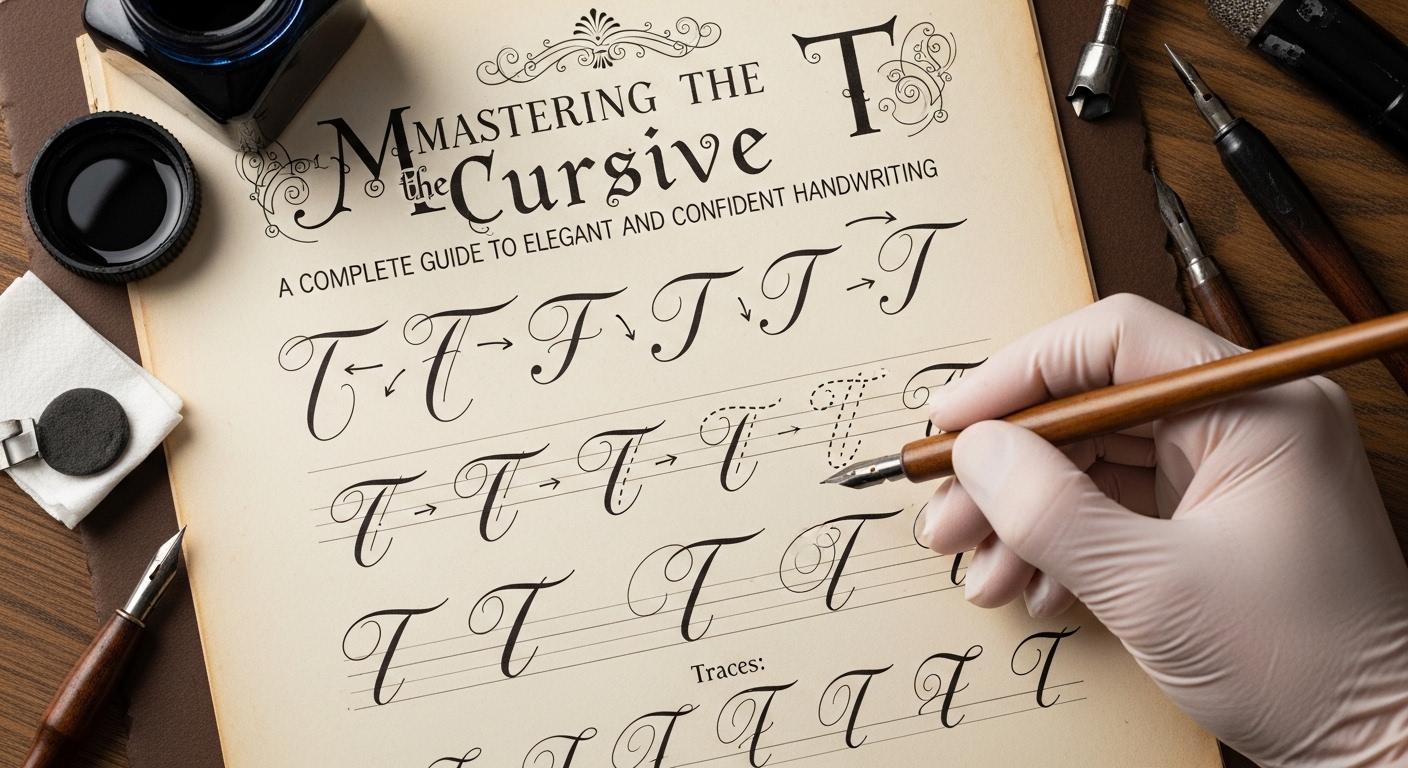
Handwriting continues to play an important role in communication, even in a digital world. Among all cursive letters, the cursive t often requires extra attention because of its distinct structure and connecting strokes. Learning to write it properly can improve the overall flow and appearance of your handwriting. Whether you are a student, professional, or simply interested in refining your penmanship, understanding the cursive t is an essential step. Its structure, techniques, and practical value to help you achieve smooth and confident cursive writing.
Understanding the Shape of a Cursive T
The cursive t has a unique and recognizable shape that differs from its printed form. It typically begins with an upward stroke, followed by a downward line that may include a slight curve. The letter is completed with a crossbar, which adds clarity and balance. This design allows the cursive t to connect seamlessly with other letters in a word. Understanding this structure is important for maintaining consistency in handwriting. By focusing on the starting point, stroke direction, and finishing detail, learners can develop better control and accuracy in forming the letter.
Why the Cursive T Is Important in Handwriting
The cursive t plays a key role in improving handwriting quality because it appears frequently in many words. A well-formed cursive t contributes to readability and creates a balanced look in written text. It also helps maintain a steady rhythm while writing, which is essential for speed and efficiency. When this letter is written correctly, it enhances the overall appearance of cursive writing. Developing confidence in forming the cursive t can lead to better handwriting habits and improved communication through clear and visually appealing text.
Step-by-Step Guide to Writing a Cursive T
Writing a cursive t involves a smooth sequence of strokes that should flow naturally. Begin at the baseline with a light upward stroke, then draw a straight or slightly curved line downward. At the bottom, create a small curve to connect with the next letter. Finally, add a horizontal crossbar slightly above the midpoint. Practicing this method repeatedly helps build muscle memory and improves consistency. Paying attention to spacing and alignment ensures that the cursive t blends well with other letters, resulting in a clean and professional handwriting style.
Common Challenges When Learning Cursive T
Many learners face challenges when trying to master the cursive t. One common issue is incorrect proportion, where the letter is either too tall or too short compared to others. Another challenge is placing the crossbar at the wrong height, which can affect readability. Inconsistent slant and uneven strokes can also make handwriting look untidy. These difficulties are normal during the learning process. By identifying these mistakes early and practicing regularly, learners can gradually improve their technique and develop a more consistent and attractive cursive writing style.
Tips to Improve Your Cursive T Skills
Improving your requires patience, practice, and attention to detail. Start by practicing the letter on its own before using it in words and sentences. Use lined paper to maintain consistent height and alignment. Focus on smooth, continuous strokes instead of rushing through the writing process. Observing well-written examples can also help you understand proper form. Over time, increasing your writing speed while maintaining accuracy will enhance your confidence. With regular practice, the will become a natural and effortless part of your handwriting.
Connecting the Cursive T with Other Letters
One of the defining features of cursive writing is the smooth connection between letters, and the plays an important role in this process. Its ending stroke is designed to link easily with the next letter, ensuring a continuous flow. Understanding how it connects with vowels and consonants helps create clear and readable words. Practicing these connections improves writing rhythm and reduces unnecessary pen lifts. This fluid movement not only enhances the appearance of handwriting but also increases efficiency, making writing faster and more enjoyable.
The Role of Practice in Perfecting Cursive T
Consistent practice is essential for mastering the improving overall handwriting. Repetition helps develop muscle memory, allowing the hand to move more naturally over time. Setting aside regular practice sessions can lead to noticeable progress. Writing words and sentences that frequently include the cursive t reinforces familiarity with its structure and connections. Patience is important, as improvement may take time. With dedication and steady effort, learners can achieve a smooth and confident cursive writing style that looks both neat and professional.
Benefits of Cursive Writing in Everyday Life
Cursive writing offers several advantages that go beyond visual appeal. It allows for faster writing, which is useful for note-taking and daily tasks. The continuous motion of cursive writing can also improve focus and memory retention. The as part of this system, contributes to smoother and more efficient writing. Additionally, cursive handwriting adds a personal touch to communication, making letters and notes feel more meaningful. Developing strong cursive skills can enhance both personal and professional interactions in a simple yet effective way.
Modern Relevance of the Cursive T
Despite the rise of digital communication, cursive writing remains relevant in many areas of life. The cursive t continues to be an important part of signatures, artistic writing, and educational practices. Many people appreciate the elegance and individuality that cursive handwriting provides. Learning cursive can also support cognitive development and creativity. In a world where typing dominates communication, maintaining the ability to write neatly by hand offers a valuable skill. The as a fundamental element, remains essential in preserving this timeless form of expression.
Conclusion
Mastering the is an important step toward achieving clear, elegant, and confident handwriting. By understanding its structure, practicing regularly, and focusing on smooth connections, anyone can improve their cursive skills. The not only enhances the visual quality of writing but also contributes to better speed and readability. Its importance extends beyond aesthetics, supporting effective communication and personal expression. With consistent effort and attention to detail, developing a refined cursive writing style is entirely possible, making handwriting both functional and enjoyable.